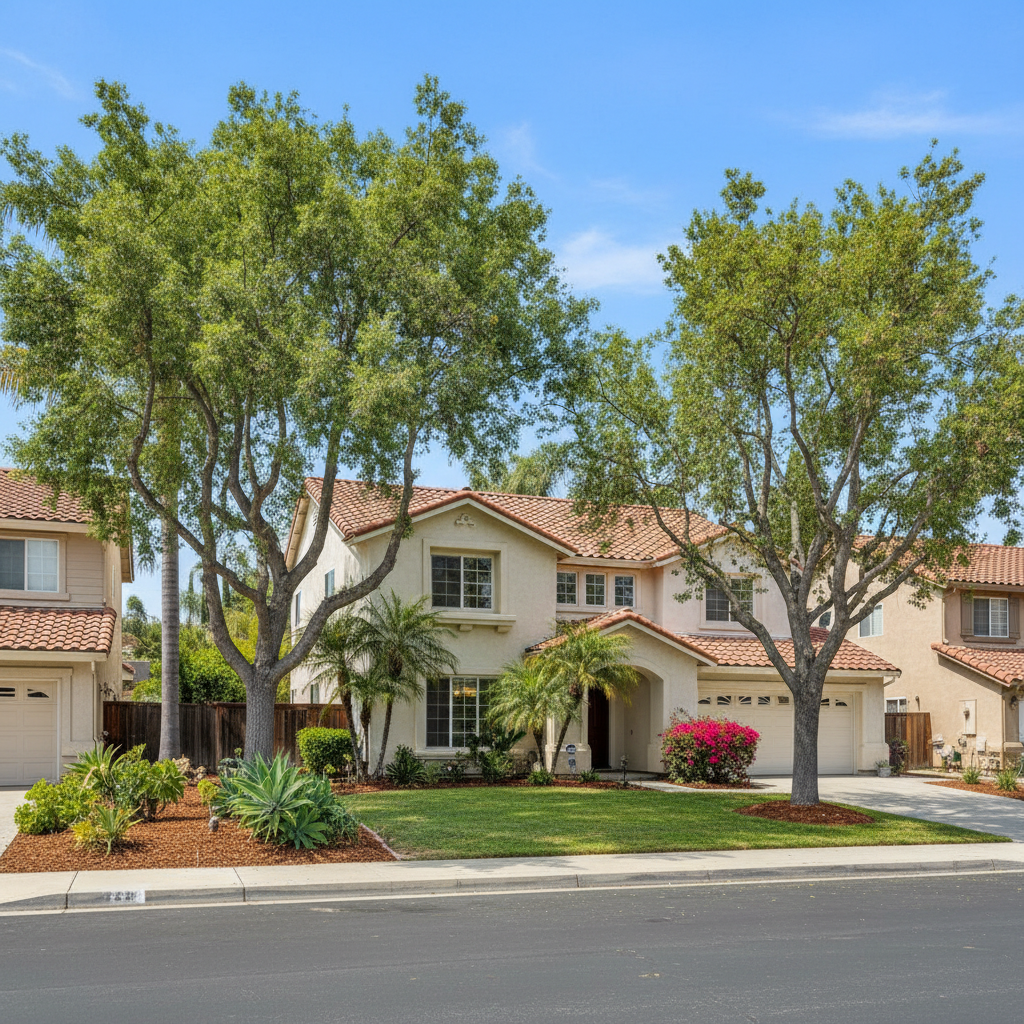
You ever look at a tree in your yard and just wonder if it's doing okay? Or maybe you've got a new sapling and you want to make sure it grows up strong. Around here in Garden Grove, we've got some specific things we need to keep an eye on when it comes to tree health. It's not just about watering; there's a whole lot more to it.
Understanding Our Local Environment
First off, let's talk about where we live. Our climate is pretty mild most of the year, but we get those hot, dry Santa Ana winds, especially in the fall. That can really stress out trees, even established ones. Then there's our soil. A lot of Garden Grove, particularly in older neighborhoods like those around the Civic Center or near Lampson Avenue, has a mix of sandy loam and heavier clay soils. This can affect drainage and how well roots can spread and access nutrients. If your tree's roots are sitting in waterlogged clay, or struggling to find moisture in super sandy spots, you're going to have problems.
I've seen it countless times: a homeowner plants a beautiful new tree, but they don't consider how our local conditions will impact it. That's where a lot of issues start. You can't just plant something and forget about it, especially not here.
Common Tree Stressors & What to Look For
So, what should you be looking for? Your trees can't talk, but they definitely show signs when they're not feeling great.
- Discolored Leaves: Yellowing, browning, or spotting leaves are often the first sign. This could be anything from nutrient deficiencies to over or under-watering, or even a pest infestation.
- Branch Dieback: Dead branches, especially at the top or outer edges of the canopy, are a serious red flag. It means parts of the tree aren't getting what they need, or there's a disease taking hold.
- Pests and Diseases: We deal with things like aphids, scale insects, and various fungal issues. Keep an eye out for sticky residue on leaves (honeydew), tiny bugs, or unusual growths. Some of these, like the Goldspotted Oak Borer, are a real threat to our native oaks.
- Trunk Issues: Cracks, cankers (sunken lesions), or excessive sap oozing can indicate internal problems or injury.
- Poor Growth: If your tree isn't putting on new growth like it used to, or if the leaves are smaller than normal, something's off.
Don't wait until half the tree is dead before you call someone. Early detection makes a huge difference in saving a tree.
The Role of Proper Watering and Nutrition
This is probably the biggest one for most homeowners. People either water too much or not enough. With our sandy soils, water drains quickly, so trees need regular, deep watering, especially young ones or during dry spells. But if you're in an area with more clay, you can easily drown a tree. You need to check the soil moisture a few inches down before you water again. Stick your finger in the dirt; it's the simplest way to know.
Then there's nutrition. Our soils can get depleted over time, especially if you're not mulching or adding compost. Trees need a balanced diet just like we do. Sometimes, a professional deep root fertilization can give your trees the boost they need, delivering nutrients directly to where the roots can absorb them best.
Why Local Expertise Matters
You can read all the general tree care articles you want, but they won't tell you about the specific challenges we face right here in Garden Grove. A company that's been working in this area for years, like Garden Grove Tree Service, understands our microclimates, our soil types, and the common pests and diseases that are prevalent in Orange County. We know which trees thrive here and which ones struggle.
We've seen the results of improper pruning, bad planting practices, and neglected health issues. When you're dealing with something as vital as your trees, you want someone who knows the local landscape inside and out. We're not just cutting branches; we're diagnosing problems, preventing future issues, and helping your trees live long, healthy lives right here in your yard.
Taking care of your trees isn't just about aesthetics; it's about protecting your investment, providing shade, and contributing to the overall health of our community. Pay attention to your trees, and if you see something that doesn't look right, get it checked out. It's usually easier and cheaper to fix a small problem than a big one.