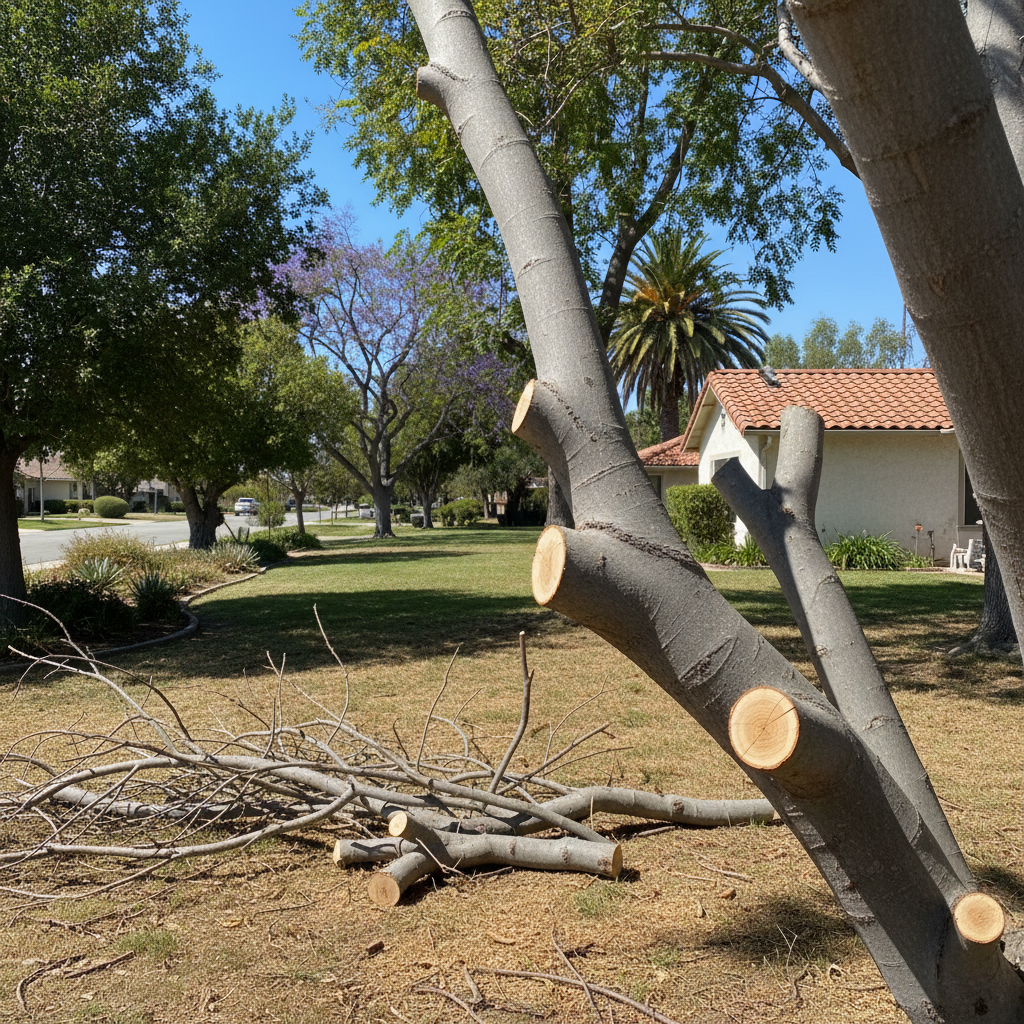
Do I need a permit to trim a tree in Garden Grove?
This is one of the first things folks ask me, and it's a good question because you don't want to get fined. Generally speaking, for routine trimming of trees on your own private property, you usually don't need a permit from the City of Garden Grove. That's for things like removing dead branches, thinning the canopy, or shaping it away from your house. You know, maintenance stuff.
However, there are big exceptions. If the tree is a 'protected tree' — which often means it's a certain size, species, or located in a specific area like a public right-of-way or near a park — then you absolutely need to check with the city's planning department. Also, if you're planning to remove more than, say, 25% of the tree's canopy in a single year, or if you're doing major structural work that could impact the tree's health or public safety, a permit might be required. And if the tree is on city property or a public easement, you can't touch it without city approval. My advice? When in doubt, make a quick call to the Garden Grove Planning Department. It's better to be safe than sorry, especially with some of those older, larger Ficus trees you see around the older parts of town, they can be considered significant.
What's the difference between tree trimming, pruning, and topping?
People use these terms interchangeably all the time, but they're not the same, and knowing the difference is key to keeping your trees healthy. 'Trimming' and 'pruning' are pretty much the same thing in casual conversation. They refer to the selective removal of branches for specific reasons: improving the tree's health, structure, or appearance; removing dead, diseased, or crossing branches; or clearing branches away from structures or power lines. It's a beneficial practice when done right.
'Topping,' on the other hand, is a big no-no for almost all trees. This is when you cut back large branches to stubs, often leaving ugly, upright sprouts that are weakly attached and prone to breaking. It's done to reduce a tree's size quickly, but it severely stresses the tree, makes it more susceptible to disease and pests, and often leads to rapid, unhealthy regrowth that's even more dangerous down the road. It's like giving your tree a really bad haircut that makes it sick. Any reputable arborist, including us at Garden Grove Tree Service, will tell you to avoid topping at all costs.
How often should I have my trees trimmed?
There's no one-size-fits-all answer here because it really depends on the type of tree, its age, its health, and what you're trying to achieve. For most mature shade trees, a good trimming every 3 to 5 years is usually sufficient to maintain health and structure. Younger trees might need more frequent attention, maybe every 1 to 3 years, to establish a strong framework and correct any growth issues early on.
Fruit trees are a different story; they often need annual pruning to encourage fruit production and maintain an accessible size. Palm trees, especially those messy Date Palms, typically need annual or biennial trimming to remove old fronds and seed pods. If you notice dead branches, branches rubbing against your roof, or if the tree canopy is getting too dense and blocking light, that's a sign it might be time for a trim, regardless of the schedule. We get a lot of calls after our Santa Ana winds kick up, because that's when weak branches really show themselves.
Can I trim my own trees, or should I hire a professional?
Look, for small, easily accessible branches on young trees, sure, you can probably handle it yourself with a good pair of pruners or a hand saw. Things like removing small suckers or watersprouts, or snipping off a low-hanging branch that's in your way. But anything beyond that, I strongly recommend calling in a professional. Here's why:
- Safety: Tree work is dangerous. Falls from ladders, cuts from saws, electrocution from power lines – it happens. We have the right equipment and training to do it safely.
- Knowledge: An arborist knows how to prune for the tree's health, not just its appearance. We know where to cut, what to remove, and how to avoid damaging the tree. Incorrect cuts can lead to disease or structural weakness.
- Equipment: We've got specialized tools, from pole saws to chippers, that make the job efficient and effective.
- Insurance: This is huge. If you or your buddy get hurt, or if a branch falls on your neighbor's fence, your homeowner's insurance might not cover it if you were doing the work yourself. A professional company like Garden Grove Tree Service carries liability and worker's compensation insurance, protecting everyone involved.
Seriously, don't risk your neck or your tree's health to save a few bucks on a big job.
What time of year is best for tree trimming?
The 'best' time really depends on the type of tree and your goals. For most deciduous trees (the ones that lose their leaves), late winter or early spring, when they're dormant, is ideal. Without leaves, it's easier to see the tree's structure and identify dead or weak branches. Plus, the tree is less stressed and will heal quicker once new growth starts.
For evergreen trees, you have a bit more flexibility, but generally, late winter to early spring is still a good bet. There are exceptions, though. Some trees, like maples and birches, can 'bleed' sap heavily if pruned in early spring, so they're often better pruned in summer or fall. Fruit trees have specific pruning times depending on whether you're aiming for fruit production or structural shaping. And if you're just removing dead or hazardous branches, that can and should be done any time of year for safety.
How do I find a reputable tree trimming service in Garden Grove?
Finding a good tree service can feel like a shot in the dark, but it doesn't have to be. First, look for companies that are insured and licensed. Ask for proof! This protects you if something goes wrong. Second, ask if they have certified arborists on staff. An arborist has specialized training and knowledge about tree care, not just how to cut branches. It's a professional designation.
Get multiple quotes, usually three is a good number, and make sure they're detailed. They should specify exactly what work will be done, how they'll clean up, and the total cost. Be wary of anyone who asks for a large upfront payment or who pressures you into a decision. Check their reviews online – Google, Yelp, even local community groups on social media can give you insights. And finally, trust your gut. If something feels off, it probably is. A good company will be transparent, professional, and happy to answer all your questions.